PROCESS
PADDY CLEANING
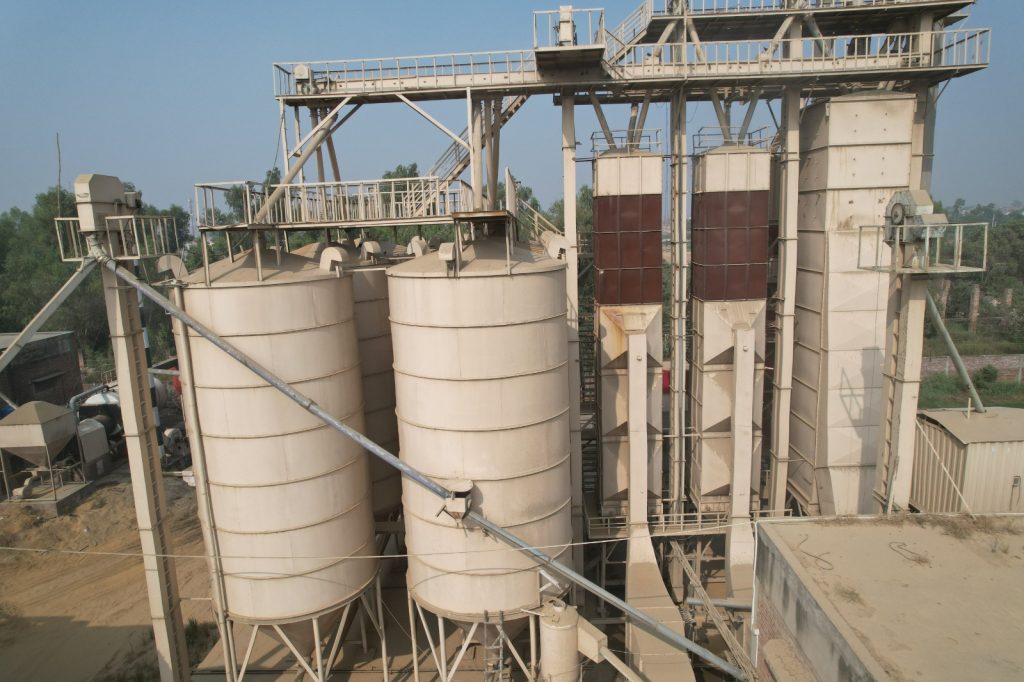
At Resham Rice Mill, the journey of rice begins with the meticulous cleaning of freshly harvested paddy — a crucial first step that determines the quality of the final product. Once the paddy arrives from the fields, it undergoes a multi-stage cleaning process designed to ensure purity and precision.
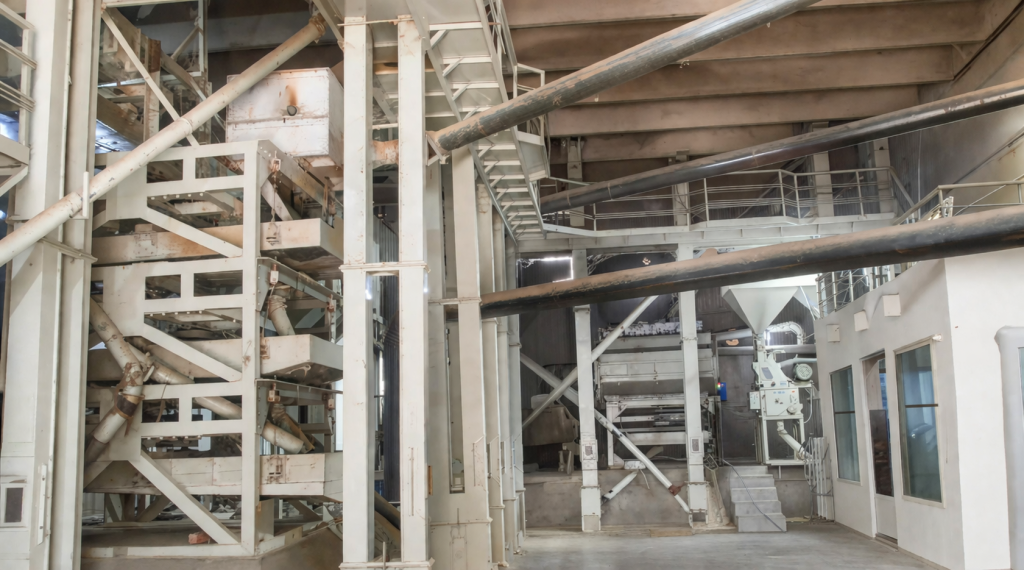
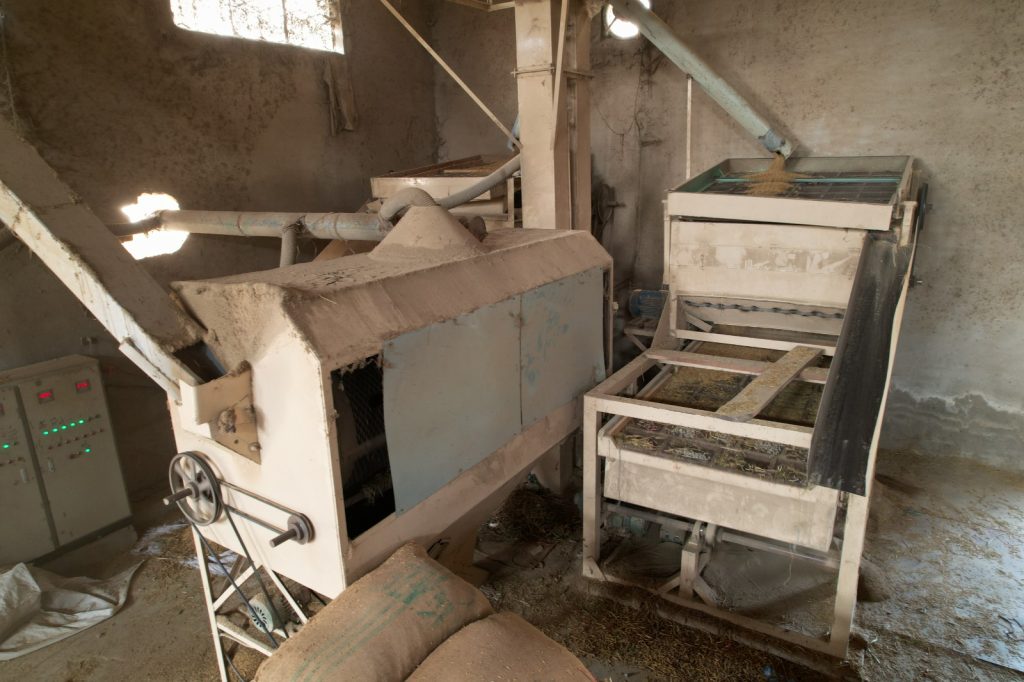
The grains are carefully passed through advanced cleaning equipment such as vibrating sieves, destoners, blowers, and magnetic separators. Each stage has a specific role — sieves filter out dust and light particles, blowers remove chaff and husks, destoners eliminate stones and heavier impurities, and magnets capture any metallic fragments.
This thorough cleaning not only enhances the appearance and quality of the rice but also protects the machinery in later stages from damage. By the end of this process, the paddy that moves forward is uniform, contaminant-free, and ready for efficient milling, reflecting Resham Rice Mill’s commitment to excellence, hygiene, and modern processing standards.
PADDY SOAKING
After thorough cleaning, the paddy moves to the soaking and conditioning stage, where it is immersed in clean water to allow the grains to absorb moisture uniformly. This soaking process softens the outer husk and prepares the grains for efficient milling.
Once the desired moisture level is reached, the paddy is drained and conditioned under controlled temperature and humidity. This ensures that every grain attains the optimal moisture content, which is essential for smooth husking, minimal grain breakage, and improved milling yield.
At Resham Rice Mill, this process is carried out using modern soaking tanks and conditioning units, ensuring precision, hygiene, and consistency across every batch of paddy.
PADDY HUSKING
Once the paddy has been properly soaked and conditioned, it moves on to the husking stage a crucial process where the outer husk (shell) of the grain is carefully removed. At Resham Rice Mill, this step is carried out using advanced husking machines that apply the perfect balance of pressure and friction to separate the husk without damaging the rice kernel inside.
The process ensures maximum recovery of whole grains and minimizes breakage, maintaining the rice’s natural shape, texture, and nutritional value. The removed husk, often called “bran,” is collected separately and later used as a byproduct for animal feed or fuel, promoting zero waste and sustainability. By the end of this stage, the paddy is transformed into brown rice, ready for further processing and polishing.
PADDY SEPARATION
After the husking process, the mixture obtained consists of brown rice, partially husked grains, and loose husk. To ensure quality and consistency, this mixture passes through the paddy separator, a specialized machine designed to precisely separate unhusked paddy from the fully husked brown rice.
At Resham Rice Mill, modern paddy separators use vibration and density-based separation technology to efficiently distinguish between lighter husks, heavier grains, and partially processed kernels. This step guarantees that only clean, fully husked brown rice proceeds to the next stage of milling, while the remaining unhusked grains are recycled back into the husker for reprocessing.
This meticulous separation not only enhances the efficiency of the milling process but also ensuresb, maintaining the mill’s commitment to excellence and precision.
RICE WHITENING
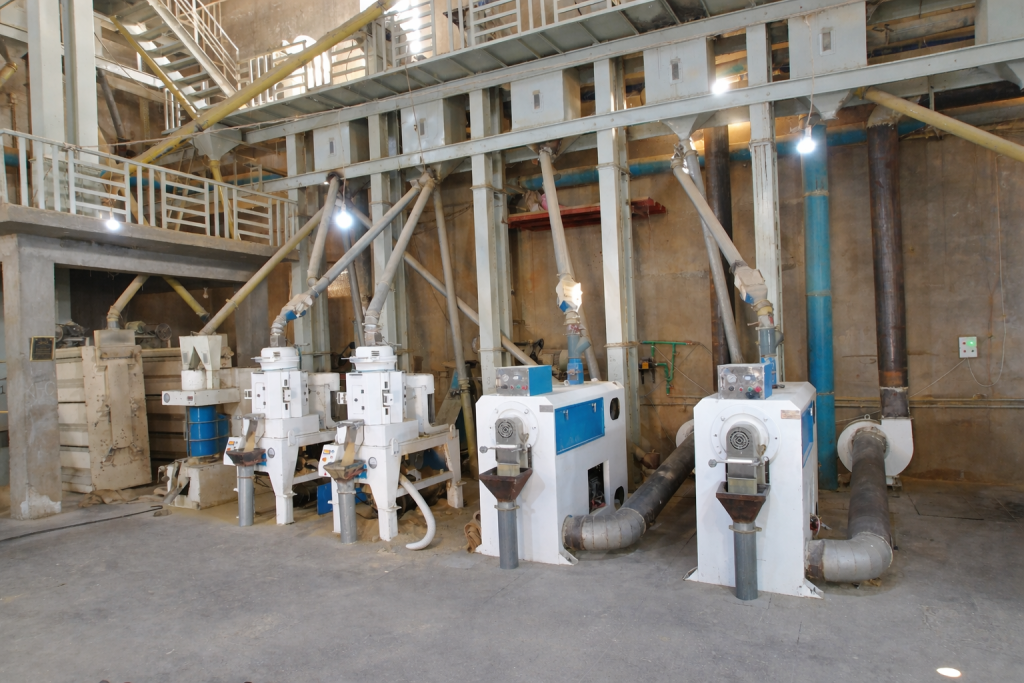
After separation, the brown rice moves to the whitening and polishing stage, where it is transformed into the bright, glossy rice that reaches consumers. In this process, the outer bran layer of brown rice is gently removed using modern whitening machines equipped with abrasive or friction rollers.
At Resham Rice Mill, advanced multi-stage polishers are used to achieve the perfect balance between whiteness, smooth texture, and grain integrity. During polishing, fine misting and controlled friction enhance the rice’s natural shine and silky finish, improving both appearance and taste.
This stage is crucial for producing premium-quality rice that meets the highest market standards clean, uniform, and visually appealing, while retaining its nutritional value and aroma.
GRADING & SORTING
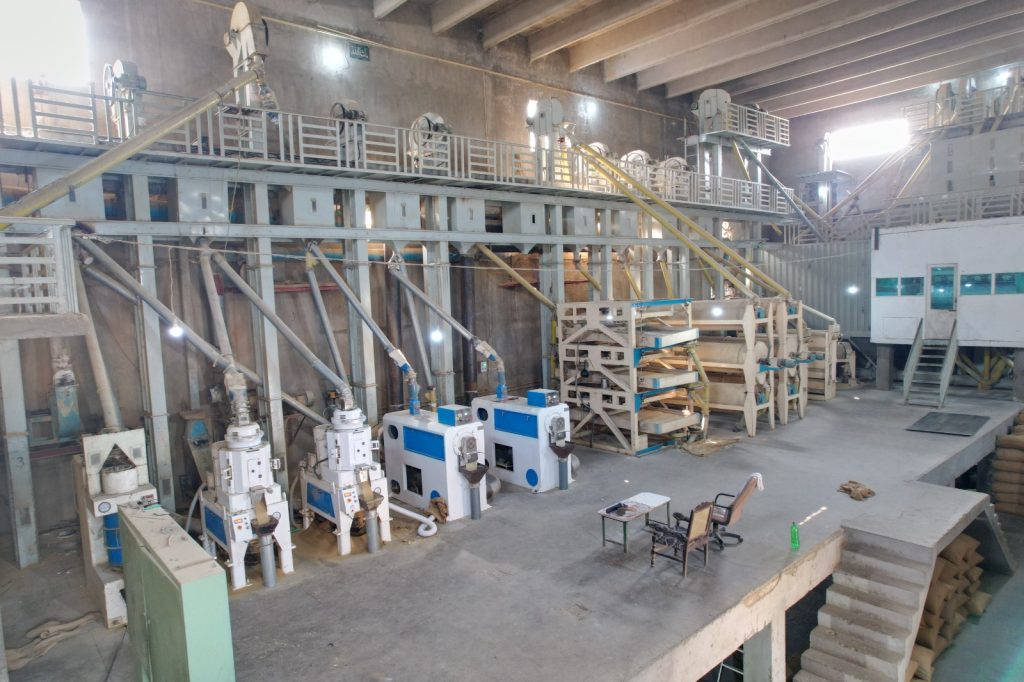
Once the rice has been whitened and polished, it moves to the grading and sorting stage, where the focus shifts to quality precision and uniformity. At Resham Rice Mill, this process is carried out using state-of-the-art grading and color-sorting machines that classify rice grains based on size, shape, and quality.
The grains are passed through vibrating graders that separate them into categories — full grains, medium grains, and broken grains. Advanced optical sorters then detect and remove discolored or defective grains to ensure that only premium-quality rice moves forward for packaging.
This careful grading process ensures consistency in appearance, texture, and quality, allowing Resham Rice Mill to deliver rice that meets both local and international standards. Broken or rejected grains are often used for byproducts such as rice flour, ensuring minimal waste and maximum value.
PACKAGING
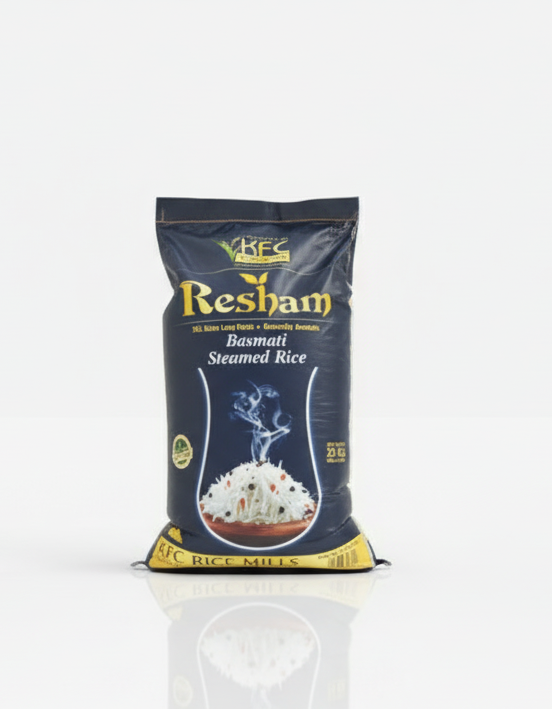
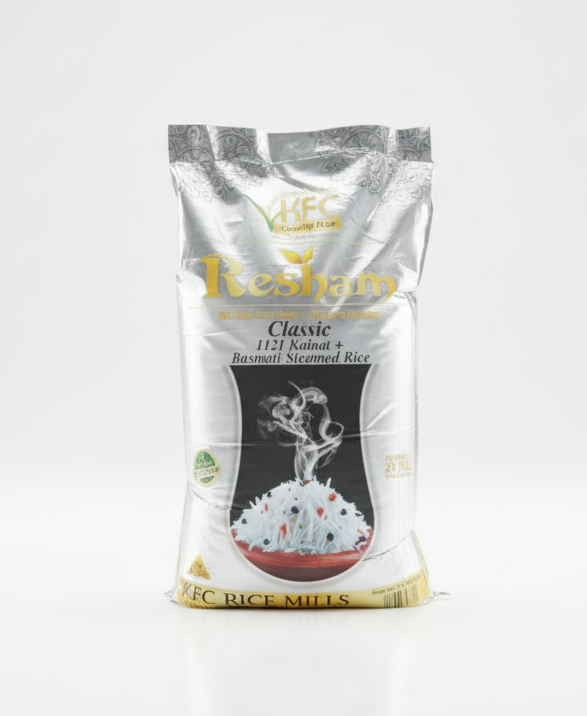
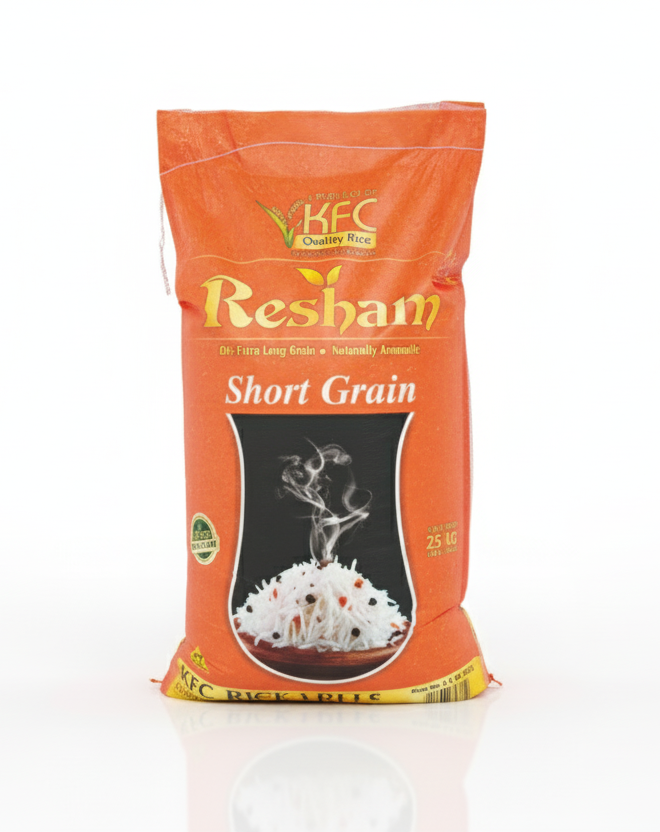
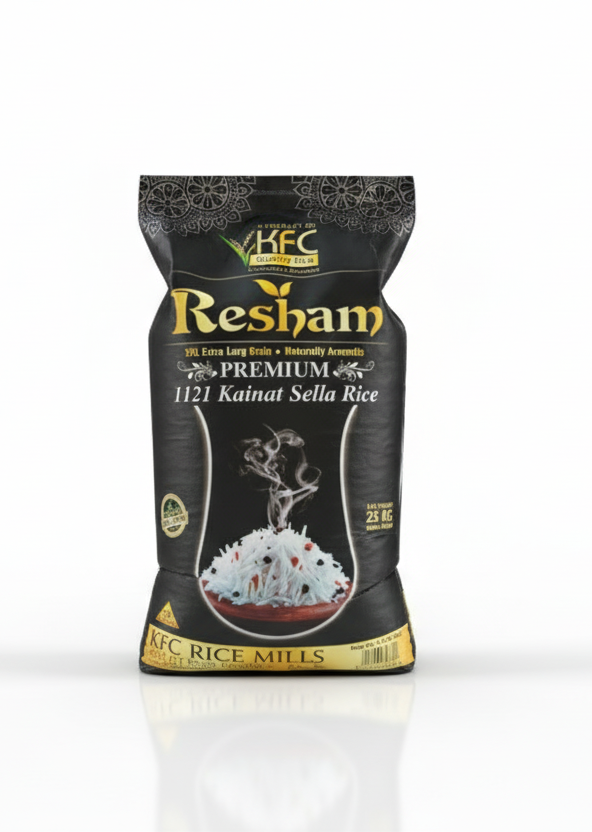
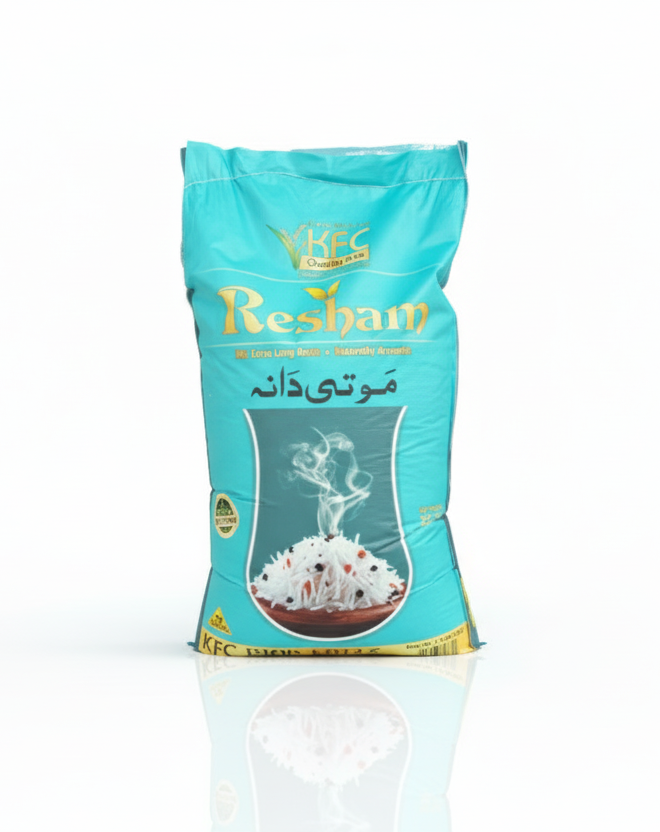
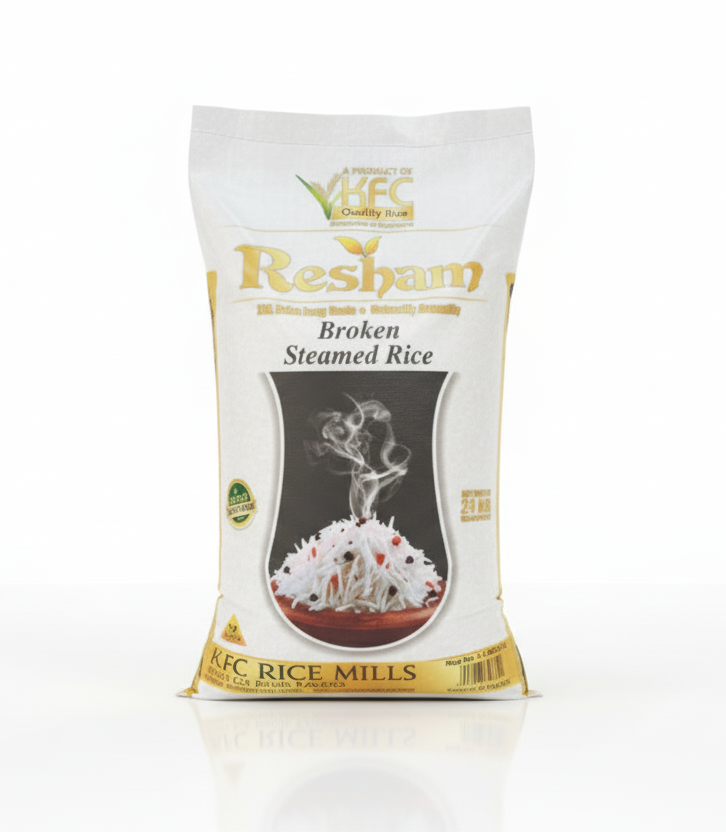
After passing through all stages of cleaning, milling, and grading, the final step at Resham Rice Mill is packaging — where quality meets presentation. The freshly processed rice is carefully weighed and packed into durable bags or sealed containers, ensuring it remains fresh, aromatic, and protected from moisture or contamination.
Each package is properly labeled with essential details such as brand name, rice variety, grade, weight, and batch number, allowing for traceability and consumer confidence. Automated packaging systems are used to maintain accuracy, hygiene, and consistency, while workers oversee quality checks to ensure every bag meets the mill’s high standards.
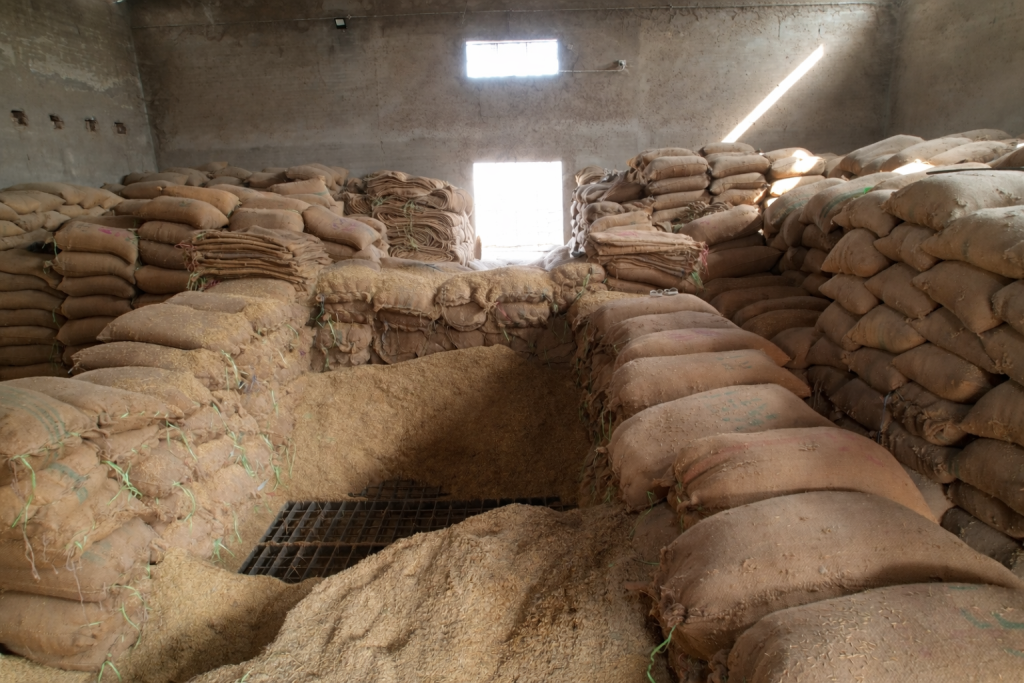
Once packed, the rice is neatly stacked and stored in temperature-controlled warehouses, ready for distribution to markets, retailers, and export destinations.